The digital era has made mobile apps a crucial aspect of our everyday routine, revolutionizing how we interact, purchase goods and services, work remotely as well as find amusement. Given the escalating demand for versatile applications by entrepreneurs and companies alike in recent times; selecting the most suitable platform for app-building to ensure success has become very important. With its extensive clientele base coupled with an accessible ecosystem alongside powerful development tools at disposal; Android stands out among existing options before enterprises, looking to reach a diverse audience and deliver engaging mobile experiences.
The fact that Android has a dominant worldwide market cannot be denied, as it consists of millions of active users and hosts an expansive network of devices ranging from smartphones to wearables. Opting for the development of Android apps allows businesses to tap into this extensive and varied audience and engage with individuals across different demographics, locations, and gadgets. Furthermore, due to its open-source framework promoting innovation, teamwork as well as personalization – developers possess ample amount of freedom in creating custom, feature-rich applications personalized according to both user’s specific demands or business objectives alike.
Factors That Influence the Cost of Developing an Android App – A Comprehensive Analysis
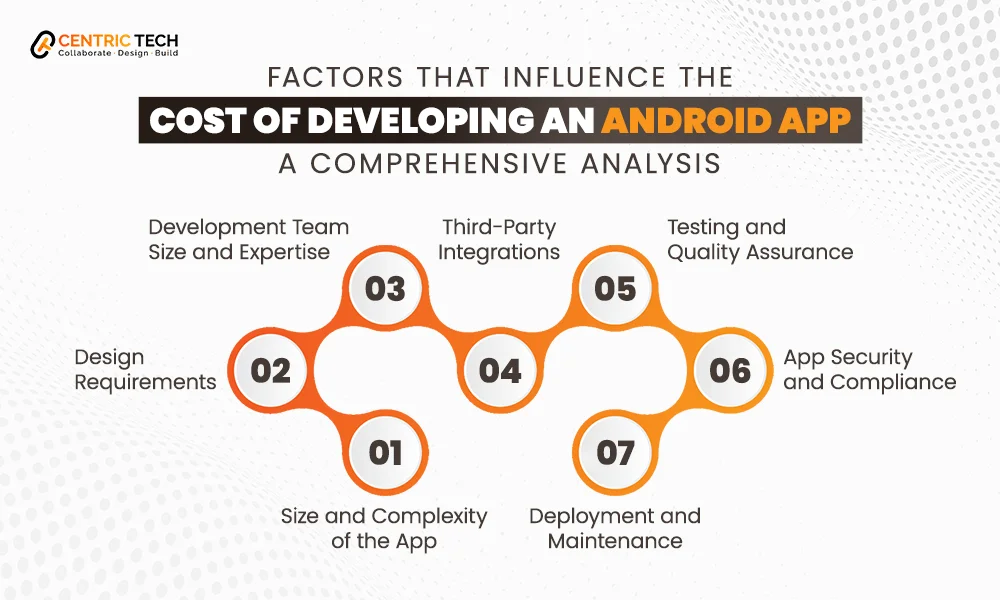
The cost of developing an Android app depends on various factors, which affect the project’s timeline and overall budget. Let us analyze these aspects to understand their influence on the development process.
- Size and Complexity of the App: The magnitude and complexity of the app are crucial factors in determining its development costs. The cost varies depending on the type of application, ranging from basic informational ones to multifaceted platforms that incorporate advanced features such as real-time data synchronization, geolocation tracking, and machine learning algorithms. As a result, larger apps with more complex functionality require greater time investment, reliance on additional resources, and expertise which ultimately leads to increased expenditure for their development.
- Design Requirements: Design is a critical aspect for the success of an app as it directly affects user participation, loyalty, and fulfillment. Customizing UI/UX design to suit specific target audiences and brand identities enhances both functionality and visual appeal; however, such customization may result in more expenses. The complexity of designs depends on elements like screen numbers, interactions with users or animations employed along with branding components – all impacting development costs significantly.
- Development Team Size and Expertise: The size and skill diversity of the development team have a significant impact on the costs associated with developing software. A bigger group consisting of developers, designers, quality assurance specialists, project managers alongside various other experts may result in higher labor expenses but can expedite progress while guaranteeing high-quality results. Proficiency levels and past experience possessed by members within the team also play an essential role in determining efficiency during development stages as well as producing standard codes leading to successful completion of projects.
- Third-Party Integrations: Third-Party Integrations are crucial for app development, as they enable payment gateways, social media APIs, analytics tools and cloud services to enhance functionality along with the user experience. However, incorporating these third-party integrations into an app requires additional effort in terms of development tasks alongside licensing fees that need maintenance regularly – which altogether leads to a higher overall cost for developmental projects.
- Testing and Quality Assurance: Testing and quality assurance play a pivotal role in the app development process by ensuring that apps meet high standards of functionality, usability, and performance. Such rigorous testing requires dedicated resources like manual or automated tests, debugging processes and optimization procedures which can sometimes add extra costs to the project budget. Thorough assessments across different devices with various operating system versions are necessary for identifying potential issues earlier on so as to deliver an error-free mobile application experience to users.
- App Security and Compliance: App security and compliance are crucial in safeguarding user data, privacy, and sensitive information against unauthorized access and cyber threats. Adopting strict security measures like encryption, secure authentication as well as observing regulatory standards such as GDPR and HIPAA may demand additional development effort along with investment costs but is vital for building credibility amongst users while building trust over time.
- Deployment and Maintenance: After app development, deploying it to the relevant stores and ensuring its optimal performance, security, and usability becomes essential. One should be prepared for extra expenses in terms of app store fees as well as time delays due to submission guidelines and review processes that come with them. Additionally, dedicated resources must cater maintenance activities like bug fixing updates or feature enhancements, while allocating budget appropriately is necessary for long-term success and sustainability of the application.
Discover more about android app development services.
Statistics on Android App Development Costs (2024)

Based on current industry data, the total expense of creating an Android application fluctuates and hinges upon several factors including size, complexity, as well as team size. Typically speaking; straightforward Android app development can cost between $20k to $50k while moderately complex apps may require a budget ranging from $50k to $100K. For software programs with advanced features and functionalities – expenses could surpass six figures depending on project requirements or specifications.
To further emphasize the significance of Android app development in 2024, let’s consider additional statistics:
- According to Statista, Android maintains its stronghold in the mobile OS market with an impressive 85% share across major regions such as the United States, United Kingdom, China and Indonesia.
- According to Statista, the Android platform has a massive user base of over 2.3 billion active users worldwide, showcasing its extensive adoption.
- According to Business of Apps, Android continues to be the preferred platform for both mobile device manufacturers and consumers as it powers 75% of all smartphones globally.
- According to Business of Apps, the popularity of the Android platform and rising demand for mobile apps has led to an exponential surge in downloads from 140 billion in 2016 to a remarkable 230 billion anticipated by 2024.
- According to Statista, the Android app market is expected to offer profitable prospects for businesses and developers as it’s estimated that revenue from these apps will exceed $600 billion by 2025.
The statistics highlight the irresistible factors that urge businesses and developers to put their money into developing Android apps. These consist of the platform’s extensive market reach, high user engagement rates as well as its impressive growth trajectory and income opportunities. As technological advancements keep emerging in mobile technology, Android continues to be a crucial innovation hub for achieving success in today’s digital age.
Check more stats regarding android app development.
Android App Development Cost
To provide a clearer picture of Android app development costs based on team size, let’s break down the estimated costs for developing simple, medium, and complex apps:
| Role | Simple App | Medium App | Complex App |
| Developers | $30-40,000 | $50-60,000 | $100,000+ |
| DevOps | $2-4,000 | $5-7,000 | $10,000+ |
| Solution Architect | $1-3,000 | $5-8,000 | $9,000+ |
| QA Specialist | $8-10,000 | $15-20,000 | $20,000+ |
| Business Analyst | $2-3,000 | $5-8,000 | $8-10,000 |
| UI/UX Designer | $4-5,000 | $5-7,000 | $10-15,000 |
| Project Manager | $5-7,000 | $10-15,000 | $10,000+ |
| Total | $20-50,000 | $50-100,000 | $100,000+ |
Comparison of Prices Between iOS, Android, and Hybrid Apps
To effectively compare prices among iOS, Android, and hybrid apps, it is necessary to take into account different elements such as development complexity, intended audience demographics, requirements specific to the platform and business targets. Costing slightly more due to its affluent user base and strict standards for development compared with other platforms; developing an app on iOS operating system typically will come at a premium price point. However, in terms of Chrome OS or Android framework options offer improved customizability alongside broader access across various devices resulting in greater flexibility than their Apple counterparts. Naturally going through Hybrid Software can allot faster time-to-market while simultaneously reducing developmental expenses however this may limit optimal program performance along with losing favorable user experience when weighed up against native applications being created specifically for single purpose use cases.
The Cost of Developing a Mobile App According to Different Types and Industries

The development cost of a mobile app significantly fluctuates, depending on the industry it caters to and its type. Below is an overview of popular categories for mobile apps along with their average development costs:
- Mobile App: Mobile applications cover a broad spectrum of software designed to operate on mobile gadgets like tablets and smartphones. These apps cater to different needs such as productivity, entertainment, communication, among others. Development costs for these programs typically vary between $15k-$300k depending on the extent of features and functionalities they offer.
- iPhone App: The iPhone App is designed exclusively for Apple’s iOS system and customized to suit the preferences and behaviors of users utilizing devices such as iPads or iPhones. This app provides a smooth user experience that integrates perfectly with their product line. Depending on the specific requirements needed, development costs typically range between $35k-$300k based on complexity levels involved in developing it.
- Android App: Android apps are created specifically for devices that utilize the Android operating system, providing a broad range of customization options and compatibility with different gadget brands. The cost associated with developing such an app is typically between $40K to $150K, reflecting the platform’s diverse ecosystem and development challenges.
- Web App: Web applications, accessible through web browsers, provide features comparable to classic desktop or mobile apps. These programs present advantages such as versatility, convenience and broad cross-platform compatibility; hence making them a lucrative alternative for both businesses and users alike. The development cost of a typical web app lies between $60 000 to $200 000 depending on the level of complexity required by its functionality.
- Startup App: A startup app is developed by start-up companies and entrepreneurs with the aim to disrupt industries, resolve issues, and offer inventive solutions. The creation process of these apps usually entails thorough research, validation checks as well as frequent revisions before gaining widespread acceptance or prosperity in its market. Depending on factors such as the targeted audience’s scope along with their vision for said application; creating a Startup App could cost anywhere between $40K-$400K approximately.
- Taxi App (Uber): Mobile technology has revolutionized the transportation industry through various taxi apps including market leaders like Uber that simplify connecting passengers with drivers effortlessly. With features such as GPS tracking, integrated payment systems and rating mechanisms for user convenience, these mobile applications provide easy-to-use and efficient travel experiences. The cost of developing a taxi app is estimated to be between $50,000-$400,000 depending on its complexity of functions and ability to scale up seamlessly over time.
- Game App: Game apps offer interactive gameplay, captivating graphics, and immersive storytelling to entertain users. These applications cater to various audiences with distinct preferences ranging from casual puzzle games to multiplayer online experiences. The cost of developing a game app substantially varies based on several factors including the genre, graphics quality, gameplay mechanics as well as compatibility across different platforms averagely priced between $60k-$250K approximately.
- Retail App: Retail applications promote the expansion of businesses by providing mobile commerce solutions that boost customer engagement and sales. These apps include product catalogs, payment processing, shopping carts, as well as personalized recommendations for consumers. The cost of developing these retail-oriented applications can range from $50k to $150k depending on factors such as the scalability and complexity regarding e-commerce functionalities involved.
- Augmented Reality App (AR): An Augmented Reality App (AR) is a unique mix of digital content and the real world, providing users with a highly interactive experience that allows them to fully engage in their surroundings. These apps offer numerous benefits for various industries such as education, gaming, retail and marketing by enabling new possibilities through enhanced user engagement levels. However, given these sophisticated technological requirements, it often costs between $100k-$250k to develop an AR app due to specialized skills needed during development stages.
- Social Media App (Instagram): The Social Media App, like Instagram, allows users from around the globe to share content and interact with others in real-time. It has revolutionized social networking by offering unique capabilities like photo/video sharing, stories & direct messaging. Development expenses range between $50K-$300K based on scalability needs and level of sophistication for features.
- Video Streaming App: An application that allows for accessing an extensive array of multimedia content such as movies, TV shows, and live events on demand is known as a video streaming app. These apps enable smooth streaming experiences across different devices while providing personalized recommendations and offline viewing options. The development cost of such apps typically falls between $80k to $300k which accounts for the necessary infrastructure, licensing requirements and content delivery expenses.
- Restaurant App: A restaurant app improves the dining experience with functionalities like digital menus, online reservations, ordering and delivery services. As a result, these apps improve efficiency for both restaurants and diners while increasing customer satisfaction levels. The cost of developing such an app typically ranges between $40,000 to $150,000 depending on backend system integration and range of features offered by the application.
- Dating App: Dating apps provide a platform for people to connect and establish relationships based on common interests, proximity, and personal preferences. These applications incorporate profile creation options along with features like location-based searches and messaging systems that helps to precisely match compatible users together to find genuine connections. Building a dating app can cost anywhere between $50k – $350K depending on its distinct attributes, user interface experience (UX), as well as the monetization tactics employed throughout promotion of such an application’s capabilities.
- Food Delivery App: The emergence of food delivery apps has transformed the process in which individuals order and obtain meals from restaurants or cafes. These applications provide ease, diversity, and adaptability by enabling consumers to peruse menus, submit orders while monitoring real-time deliveries. The average development cost for a food delivery app falls between $40,000 to $150,000, depending on the scope of features, integration with third-party services, and geographical coverage.
- Healthcare App: Healthcare apps enable individuals to take charge of their health and well-being by providing them access to medical information, facilitating remote consultations with healthcare professionals, and offering tools for monitoring symptoms and tracking fitness. These applications cover a range of functions including medication management, telemedicine services as well as various other features aimed at promoting better health outcomes. Depending on factors such as the level of regulatory compliance required or integration with electronic health records (EHR) systems – development costs for these apps can vary between $55k-$300K depending on their complexity.
Each of these mobile app categories serves distinct purposes and industries, catering to diverse user needs, preferences, and behaviors.
Discover more about hiring a skilled android developer for your business.
Effective Strategies to Reduce Android App Development Costs
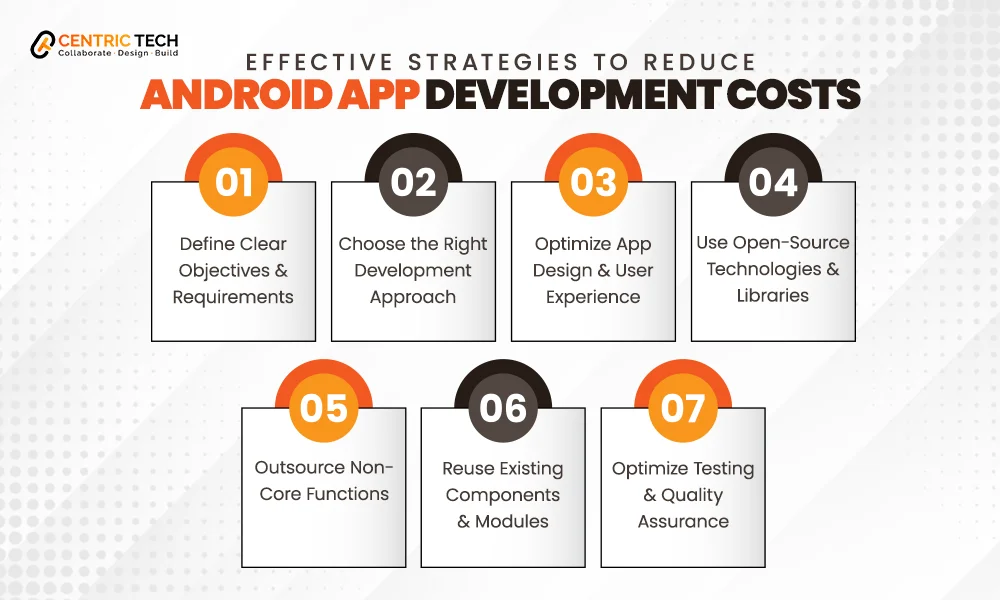
While investing in Android app development offers immense opportunities for businesses, managing development costs is essential to ensure a positive return on investment (ROI) and maximize profitability. Here are some effective strategies to reduce Android app development costs without compromising on quality or functionality:
- Define Clear Objectives and Requirements: To begin creating your Android app, establish unambiguous objectives and requirements. You must carry out extensive market research to recognize user demands and arrange necessary functions in order of priority, preventing unwarranted development costs from creeping up on you. Clearly defining the project scope will help streamline building procedures while effectively using available resources.
- Choose the Right Development Approach: When selecting a development approach, it is important to evaluate the advantages and disadvantages of various options including native, cross-platform or hybrid development based on factors such as project requirements, timeline constraints and budget limitations. Native approaches may offer superior performance with specialized features for specific platforms while adopting cross-platform/hybrid solutions could shorten developmental turnaround times by utilizing shared code bases along with resources in order to lower costs.
- Optimize App Design and User Experience: To improve usability and engagement while reducing development complexities and costs, focus on intuitive and user-friendly app design. Emphasize simplicity, clarity, and consistency in UI/UX design to simplify navigation, lessen cognitive load, and boost satisfaction rates. During the development phase, conduct early-stage testing with users to gather feedback addressing any potential issues before they escalate into costly revisions.
- Use Open-Source Technologies and Libraries: Maximize the benefits of open-source technologies, frameworks, and libraries for faster development, lessened effort in creating software codes, and reduced expenses on licensing. Obtain various tools, templates as well as resources that can pave the way to easier workflows with improved productivity via platforms like Android Studio. Furthermore, explore community-powered databases and management functionalities such as user authentication systems or UI components; saving time spent on building apps from scratch while reducing development expenditures at the same time.
- Outsource Non-Core Functions: To reduce development costs and resource constraints, it’s worth considering outsourcing non-core functions like UI/UX design, quality assurance, and backend development. This can be done by working with specialized service providers or freelancers who offer expertise in these areas. By doing this you’ll gain access to a global talent pool which allows for scaling your team as needed without the added overhead of maintaining an in-house workforce. It is important to establish clear communication channels that ensure all parties are on board with milestones and deliverables throughout the project’s duration; regular oversight will also help maintain adherence to strict timelines while ensuring top-quality results at all times.
- Reuse Existing Components and Modules: Identify chances to reuse previously developed components, modules, and code snippets from prior projects or third-party sources to accelerate development timeframes, lessen duplicate workloads while decreasing expenses. Utilize cross-platform frameworks like React Native and Flutter which provide reusable libraries for UI components that can quicken the application building process and reduce overall costs. Moreover, take advantage of cloud-based services as well as APIs such as authentication protocols along with push notification tools, reducing overhead during development phases.
- Optimize Testing and Quality Assurance: To enhance testing and quality assurance, incorporate automated testing techniques to simplify the process. By detecting glitches early on in development, this ensures dependable app functionality resulting in better performance and reliability. This method also speeds up conducting comprehensive tests with broader coverage while decreasing costs during production. Prioritizing risk assessment for user impact guarantees efficient distribution of resources applied towards crucial aspects necessary for optimal application functioning- leading to faster release timeframes through streamlined operations focusing primarily on critical functionalities alongside prime use cases.
Why Choose Centric Tech
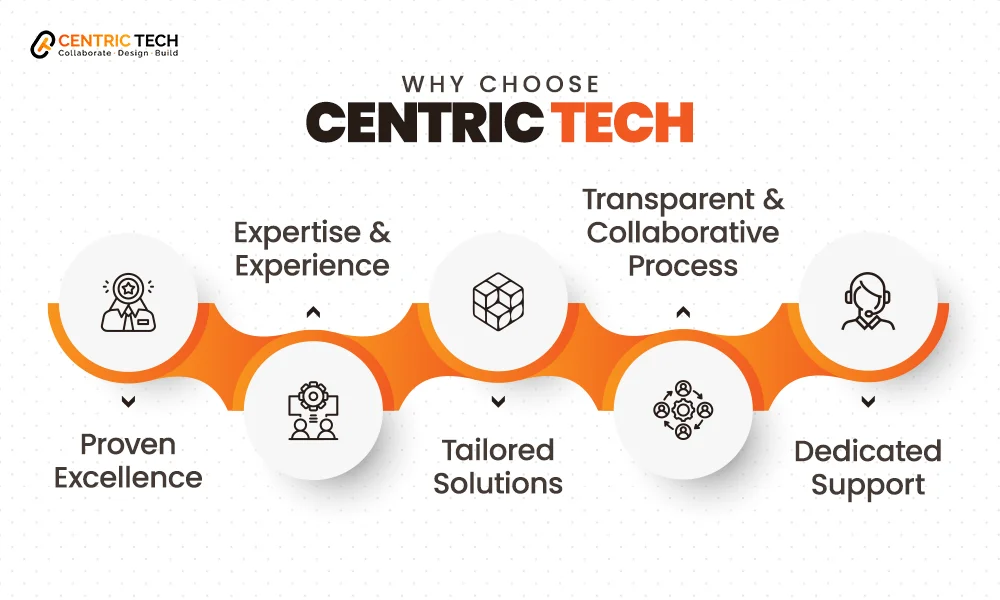
Selecting the right partner for mobile app development is a pivotal aspect of ensuring the success of your project. Centric Tech excels as an elite option for enterprises in need of high-quality solutions customized to their needs. Here’s why you should choose Centric Tech for your mobile app development needs:
- Proven Excellence: Centric Tech boasts a proven track record of excellence in the field of mobile app development, consistently exceeding client expectations by delivering exceptional solutions. Our success is evident through glowing reviews on reliable platforms including Trustpilot and Google, as well as our roster of satisfied clients. We aim to innovate with each project we undertake, while maintaining an unwavering commitment to quality that yields apps capable of driving valuable results for businesses. Have a look yourself at our great reviews by our esteemed clients. To further establish a stronger trust, you can check our portfolio and reviews on Thumbtack and Trustpilot.
- Expertise and Experience: Centric Tech has honed its skill in mobile app development, staying up to date with the latest trends, technologies and best practices through years of industry experience. Our proficient team comprises skilled professionals who bring a wealth of creativity and knowledge into each project thus guaranteeing that your application will stand out from competitors.
- Tailored Solutions: Recognizing the individuality of each enterprise, Centric Tech values a personalized approach to every venture. By closely collaborating with our clients and acknowledging their distinct objectives, challenges, and needs; we offer personalized solutions that ensure measurable outcomes. Whether you are an emerging startup disrupting your industry’s norms or a long-standing corporation seeking to improve customer engagement levels – our expert team caters unique resolutions directed towards achieving your specific goals.
- Transparent and Collaborative Process: Our approach is built on transparency and collaboration. We value open communication from the start of your project to its completion, and beyond. Every step of the way, we involve you in our process so that together, we create a final product that reflects your vision and incorporates your feedback effectively.
- Dedicated Support: At Centric Tech, we go above and beyond to satisfy our clients. Our dedication to your success doesn’t stop after delivering the project – we offer continuous support and maintenance services that guarantee your app remains secure, up-to-date, and optimized for superior performance. Our reliable support team is available round-the-clock if you have any concerns or issues with the application. Rest easy knowing that whatever challenges might crop up along the way, it won’t affect the long-term stability of your product.
To summarize, the cost of developing an Android app in 2024 is dependent on various factors such as complexity, team size, design requirements, third-party integrations, testing procedures and security. It’s essential for businesses and developers to take these into account when planning their budget so that they can deliver high-quality mobile experiences successfully. With endless possibilities for creativity and growth in this dynamic field of mobile landscape – whether you’re a startup looking to disrupt the market or an enterprise seeking better customer engagement- Android app development could lead your way towards success!